Wastra (from Sanskrit vastra, "cloth") is the Indonesian word for traditional textiles that carry meaning — fabric that is woven, drawn, dyed and worn as a language of identity, rank, faith and belonging.
Indonesia sits on the busiest sea-lanes of Asia. For two thousand years Indian, Chinese, Arab, Persian, European and Japanese ships brought threads, dyes and ideas into its ports, and island artisans absorbed every one of them into something unmistakably local. That is why we read Indonesian dress as an Indo-Asian story: a dialogue between the subcontinent, the Chinese mainland, the Islamic world and the indigenous Austronesian cultures that came first.
"Cloth is not merely worn; it is given, inherited, buried and prayed over."
0+
islands in the archipelago
0+
ethnic groups, each with its own dress codes
0+
living languages
0
Batik inscribed by UNESCO as Intangible Cultural Heritage
Chapter 01
Timeline & Historical Divisions
Scroll to sail through six eras ⟶
Ic. 2000 BCE – 4th c. CE
Pre-Hindu-Buddhist & Indigenous Era
Austronesian seafarers settle the islands, bringing the backstrap loom, bark-cloth beating and the oldest Indonesian resist technique: warp ikat. Bronze-age contact with the Dong Son culture of Vietnam seeds the spirals, hooks, meanders and tumpal triangles still woven today.
Fibres: bark (fuya), banana, lemba leaf, ramie, later cotton
Motifs: ancestors, crocodiles, ship-of-the-dead, skull trees
Living legacy: Dayak, Toraja, Sumba and Timor ikat
Textile signature · Warp ikat & bark cloth
II7th – 15th c.
Hindu-Buddhist Kingdoms: Sriwijaya & Majapahit
Sriwijaya (Palembang, 7th–13th c.) controls the Strait of Malacca; Indian silk patola double ikat arrives as a royal luxury and becomes a model for local motifs. In Java, Borobudur's reliefs (9th c.) show patterned wraps, and Majapahit (1293–c.1527) statues wear cloths carved with the kawung motif.
Ideas: cosmic order, mandala symmetry, the sacred mountain
Status: gold thread and silk as signs of divine kingship
Seeds: songket of Palembang; gringsing named in Old Javanese texts
Textile signature · Patola, gold & kawung
III13th – 18th c.
Islamic Sultanates & Maritime Trade
Pasai, Aceh, Demak, Banten, Mataram, Palembang and Gowa-Tallo rise on the spice trade. Islamic aesthetics stylise living figures into flowers, clouds and geometry; Arabic calligraphy enters cloth (Bengkulu's besurek, Cirebon's banners). Courts codify larangan — forbidden motifs such as parang rusak, reserved for royalty in Yogyakarta from 1785.
Imports: Gujarati patola, Coromandel chintz, Chinese silk
New tech: weft ikat & silk weaving in coastal sultanates
Flourishing: Palembang & Minangkabau songket
Textile signature · Larangan batik & calligraphy
IV1602 – 1945
Dutch Colonial Era (East Indies)
The VOC (1602–1799) and then the colonial state turn cloth into commerce. Around the 1840s–50s the copper cap stamp industrialises batik. Indo-European workshops create batik Belanda (bouquets, fairy tales), Peranakan Chinese studios perfect batik encim, and synthetic dyes arrive. Batik merchants found Sarekat Dagang Islam (1905, Laweyan) — an early seed of nationalism. Under Japanese occupation (1942–45) appears the lavish Jawa Hokokai batik.
Icons: Eliza van Zuylen (Pekalongan), Oey Soe Tjoen (Kedungwuni)
Dress codes: kebaya worn across Javanese, Indo & Chinese women
Textile signature · Batik cap, Belanda & encim
V1945 – 1998
Post-Independence & Nation-Building
Sukarno (1945–67) asks Go Tik Swan (K.R.T. Hardjonagoro) to design "Batik Indonesia" — fusing court motifs with coastal colour into one national cloth, while the kebaya becomes the national dress for women. Under Suharto (1967–98) batik becomes official wear: Jakarta's governor makes it formal attire in 1972, civil-service batik uniforms follow, and world leaders don batik at APEC 1994 in Bogor. Designer Iwan Tirta lifts batik into couture.
Industry: GKBI batik cooperatives (1948), Danar Hadi, Batik Keris
New wardrobe: the long-sleeved men's batik shirt as formal dress
Textile signature · Batik Indonesia & national dress
VI1998 – today
Contemporary & Modern Fashion
On 2 October 2009 UNESCO inscribes Indonesian batik — now celebrated as Hari Batik Nasional. Fashion weeks in Jakarta, a booming modest-fashion industry, Gen-Z "kebaya with sneakers" street style and slow-fashion labels working with natural-dye artisans redefine heritage. In December 2024 the kebaya is inscribed by UNESCO as a shared heritage of five Southeast Asian nations.
Debates: printed "batik-motif" textiles vs. hand-made batik
Tools: Batikmark certification, digital archives, social media
Every island speaks its own textile dialect. Tap a pin on the map — or a tab — to visit five great clothing cultures.
Field note · Lombok
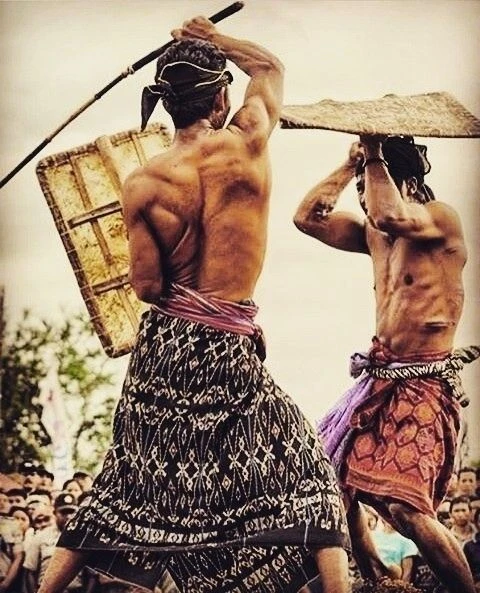
Cloth in motion: the Peresean
In Lombok's Sasak Peresean ritual, fighters (pepadu) duel with rattan staves and buffalo-hide shields (ende). Look at their dress: hand-woven tenun sarongs hitched at the waist, a sapuq head-cloth, and a sash. Textile here is not costume but armour of identity — the same cloths are woven in villages such as Sukarara, famous for Sasak songket.
Chapter 03
Core Textile & Craft Categories
Eight families of technique. Hover or tap a swatch to turn the cloth over.
Wax-Resist Batik
Tulis & Cap
Batik Tulis & Batik Cap
Hot wax is applied to cloth to resist dye. Tulis ("written") is drawn by hand with a copper canting — fine pieces take months. Cap uses a copper stamp (from the 1840s) for faster, repeated motifs. Kombinasi mixes both.
cantingmalam (wax)cap
Handloom Tenun
Woven cloth
Tenun — handloom weaving
All woven Indonesian cloth is tenun. On the gedogan (backstrap / body-tension loom) the weaver's own body tensions the warp. The ATBM (non-machine treadle loom) speeds up plain and striped cloth like Javanese lurik.
gedoganATBMlurik
Warp Ikat
Pattern in the warp
Warp ikat
Bundles of warp threads are tied with fibre and dyed before weaving, so the pattern lives in the lengthwise threads. The oldest ikat in Indonesia — Sumba hinggi, Flores, Timor, Toraja and Dayak pua kumbu. The cloth is warp-faced; motifs have soft, feathered edges.
ikat = "to tie"hinggipua
Weft Ikat
Pattern in the weft
Weft ikat
Here only the weft (crosswise thread) is resist-dyed; the weaver nudges each pass into place. It spread with silk and Islamic-era trade into coastal courts — Palembang limar, Balinese endek, Bugis silks — producing fluid, shimmering motifs.
endeklimarsilk
Double Ikat
Geringsing of Tenganan
Double ikat
Both warp and weft are tied and dyed, then aligned precisely while weaving. In Indonesia it is made only in Tenganan Pegeringsingan, Bali — the sacred geringsing ("against illness"), believed to protect its wearer. A single cloth can take years.
geringsingTengananpatola
Songket
Gold supplementary weft
Songket
From sungkit, "to hook": extra gold or silver threads float over a silk or cotton ground, picked up by hand. Royal cloth of Palembang and Minangkabau, also Bali, Lombok, Sambas and Bugis lands. Motifs: pucuk rebung (bamboo shoot), stars, lepus (fully gilded).
lepuspucuk rebungbenang emas
Kerancang & Tekat
Cutwork & embroidery
Kerancang & Tekat
Kerancang is openwork: cloth is embroidered, then cut away to leave lace-like windows — the glory of the Peranakan kebaya encim and Minangkabau veils. Tekat couches gold thread over padded card for raised, gleaming motifs on Malay and Palembang regalia. Cousins: Lampung tapis and sulam usus.
bordirtekat timbultapis
Natural Dyes
& fibre sciences
Natural dyeing & fibres
Indigo (tarum) for blue; mengkudu (morinda root) for red; soga barks for the brown of Central Java. Mordants such as alum, lime and iron shift each shade. Fibres range from cotton and silk to bark, banana, doyo leaf and pineapple-like plant fibres.
tarummengkudusoga
Interactive · Batik Tulis
From white cloth to batik, in nine steps
Interactive · The Ikat Loom
Warp, weft or double?
Choose where the dyed pattern lives, then watch the loom weave. Notice how warp ikat blurs vertically, weft ikat blurs horizontally, and double ikat needs both sets to line up — which is why geringsing is so rare.
Interactive · Natural Dye Garden
Dip a cloth, change the mordant
Pick a plant, then a mordant. The same dye bath shifts colour depending on the metal salt that fixes it to the fibre.
mori
Choose a plant to begin.
Chapter 04
Socio-Economic & Technical Lenses
Four ways to read a cloth: as a prayer, a trade record, a labour history and a chemistry experiment.
Socio-Cultural Context & Spiritual Anthropology
Across the archipelago, cloth is a social currency and a sacred object. In Sumba, marriage exchanges pair "female" goods (cloth, pigs) with "male" goods (metal, horses, buffalo). Heirloom cloths are pusaka — kept, not worn, brought out for rites. Toraja and Sumbanese dead are wrapped in many layers of textile for the journey to the ancestors.
Motifs are philosophy you can wear. Javanese batik encodes the court's ideals of patience, harmony and cosmic order; Balinese poleng embodies rwa bhineda, the balance of opposites.
ParangUnbroken waves against rock — perseverance; once reserved for kings.
KawungPalm-fruit cross of four directions and a centre — purity & order.
TruntumStars that "bud again" — rekindled, guiding love; worn by the bride's parents.
PolengBlack, white & grey — good, evil and the balance between.
Mega mendungRain clouds — patience and coolness of heart (Cirebon).
TumpalTriangle "bamboo shoots" — growth and sacred mountains.
Trade Routes & Cross-Cultural Fusion
Indonesia sat at the hinge of the maritime Silk and Spice Roads. Cloth was the main currency for cloves, nutmeg and pepper: Indian textiles went east; spices went west. Each visitor left an imprint. Click a route:
Labour Systems, Gender Roles & Artisan Economics
Weaving and batik tulis have long been women's knowledge, passed mother to daughter; among the Iban, mastering the mordant bath for pua kumbu was called "the women's war-path" — equal in prestige to a man's warfare. When the copper cap arrived, stamping in hot workshops became largely men's work.
In Javanese centres such as Laweyan (Solo) and Pekalongan, wealthy juragan merchants ran a putting-out system: cloth and wax went out to village drawers, finished pieces came back. Today, cooperatives, fair-trade enterprises and certification (Batikmark, 2007) try to rebalance value, while a key threat is regeneration — fewer young people choose the loom.
How long does one cloth take? (approximate, varies widely)
Printed "batik-motif" fabricminutes
Batik capdays
Lurik on ATBM loomdays–weeks
Songketweeks–months
Batik tulis halusmonths
Sumba hinggi (natural dye)months–a year+
Geringsing double ikatyears
Hand-work cost is mostly time: dye baths alone may be repeated for weeks while each layer dries.
Technical Construction Mechanics & Dye Chemistry
On the loom: warp threads run lengthwise under tension; the weft passes through the shed opened by heddles, then is beaten in. Backstrap looms weave a continuous warp, giving the tubular cloth that becomes a sarong.
In the wax: batik wax blends beeswax, paraffin and resins; at the right temperature it soaks through the cloth so the resist works on both faces. Cracked wax lets dye seep in, creating the fine veins called remukan. Batik must be dyed in cold baths — hot dye would melt the resist.
In the vat: indigo is insoluble. Fermentation in an alkaline vat reduces it to soluble, yellow-green leuco-indigo; dipped cloth turns blue as air re-oxidises it. Morinda red needs an aluminium mordant — traditionally from Symplocos leaves — and an oil pre-treatment from candlenut.
Indigo insoluble→Leuco-indigo soluble, in vat→Oxidised blue locked in fibre
Each dip deepens the blue. Real indigo may need 10–20 dips.
Chapter 05
Garment Taxonomy & Costume Silhouettes
Dress the figure. Combine upper garments, lower drapes and motifs to learn the vocabulary of Indonesian silhouettes.
Upper garment
Lower garment & drape
Cloth motif
Royal & Court Regalia
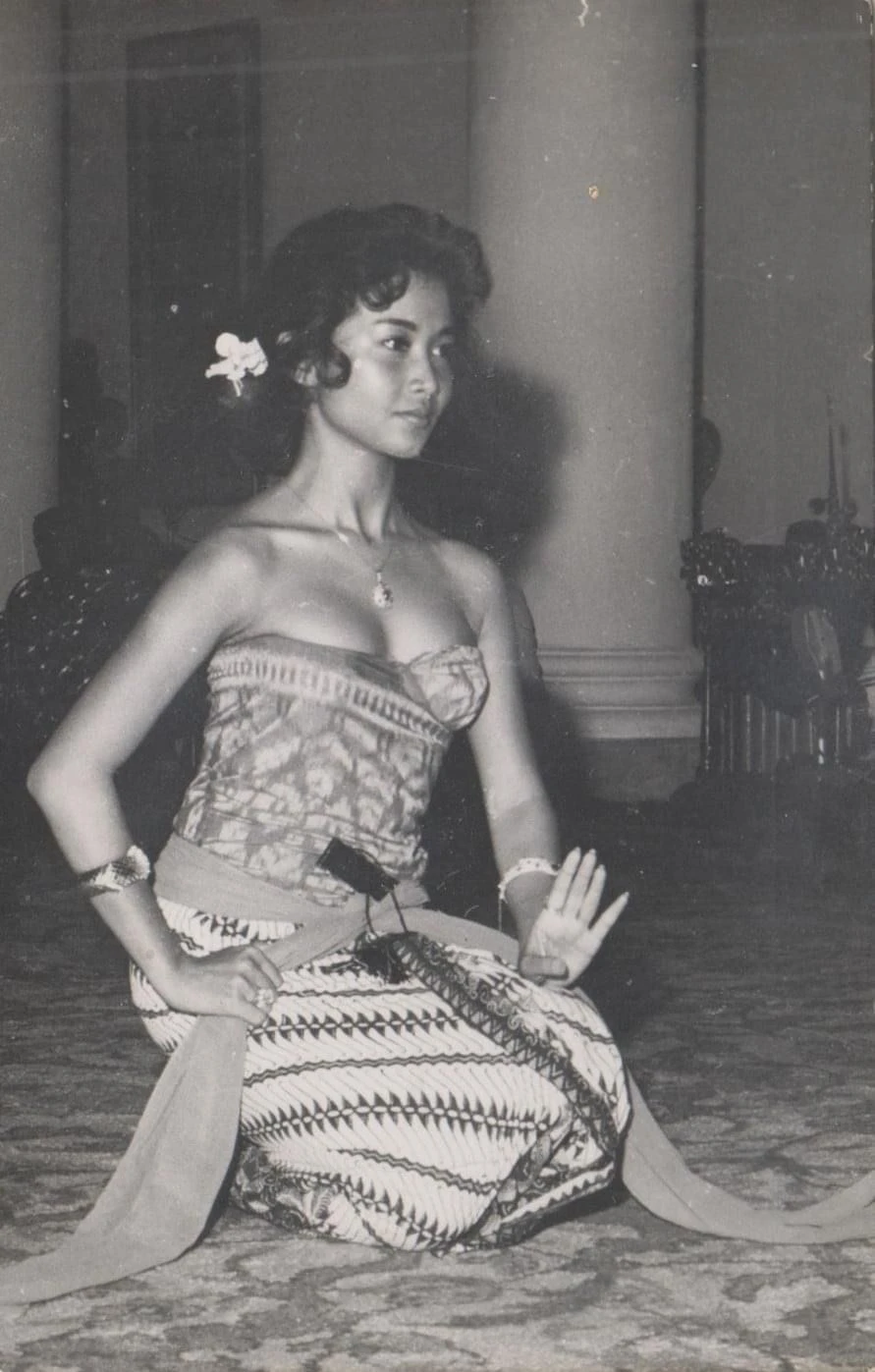
At the Yogyakarta and Surakarta kraton, the grandest garment is the dodot (or kampuh) — a huge cloth, roughly twice the size of a kain, wrapped in the basahan style for royal weddings and dances, often in alas-alasan (forest-creature) batik with gold leaf (prada). Men add the beskap or surjan jacket, the blangkon head-cloth and a keris at the back. Minangkabau brides wear the golden suntiang crown; Palembang royalty wear aesan gede in gilded songket.
Life-Cycle Ritual & Ceremonial Attire
Mitoni — at seven months of pregnancy a Javanese mother is bathed and changes into seven kain in turn; the simplest, a striped lurik, is finally "chosen" as a lesson in humility.
Tedak siten — a baby's first steps on earth, guided over a ladder and into a cage of gifts.
Metatah & coming of age — Balinese tooth-filing in songket and gold; circumcision dress in Java and Sumatra.
Wedding — sido mukti ("may you be prosperous") for the couple, truntum for the parents; Bugis brides in the gauzy baju bodo.
Death — Sumbanese and Toraja elders are wrapped in dozens of heirloom cloths; Batak ulos are given at every stage, from birth to burial.
Modern & Contemporary Silhouette Adaptation
Kebaya → cropped, peplum, sheer layers over T-shirts, kebaya-blazer hybrids
Kain panjang → wrap skirts with wiru pleats, slit maxi skirts, sarong pants
Batik shirt → oversized streetwear, bomber jackets, outerwear
Selendang → hijab scarves & shawls in modest fashion
Gen-Z movements like #BerkebayaGembira and "Selasa Berkebaya" (Kebaya Tuesday) wear the kebaya with jeans and sneakers — heritage as everyday streetwear.
Chapter 06
Contemporary Fashion Ecosystem
Where wastra lives now: in couture ateliers, modest-fashion runways and slow-fashion studios.
Modern Haute Couture & Heritage Preservation
Couturiers translate wastra into runway language: the late Iwan Tirta (batik couture), Obin of BIN House (hand-woven silks), Anne Avantie (kebaya couture), Didiet Maulana (IKAT Indonesia) and the sculptural work of Tex Saverio. Preservation runs alongside: the Textile Museum in Jakarta, Danar Hadi's batik museum in Solo, Museum Batik Pekalongan and Cita Tenun Indonesia, which revives weaving villages.
Modest & Islamic Fashion Industry
As home to the world's largest Muslim population, Indonesia is a global leader in modest fashion. Since the hijab's rise in the 1990s, designers such as Dian Pelangi and Ria Miranda and labels like Buttonscarves and Zoya have built a vast industry; events like the Muslim Fashion Festival (MUFFEST) showcase it. Batik, ikat and songket appear in tunics, gamis, kaftans and printed scarves — tradition folded into faith-led style.
Ethical, Sustainable & Slow Fashion
A new generation pays artisans fairly and returns to natural dyes: Sejauh Mata Memandang (zero-waste, recycled cloth), Sukkha Citta (women artisans, farm-to-closet), Toraja Melo (Toraja & Mamasa weavers), Threads of Life in Bali (natural-dye ikat cooperatives) and Kana Goods (indigo batik). Shared values: traceability, upcycling, eco-print, mending — and the hand-made over the printed copy.
Interactive · Slow-fashion pledge
Tie a knot for every promise
Every ikat motif begins with a tied knot. Tick a promise and watch the lotus bloom.
Iwan TirtaObin · BIN HouseAnne AvantieDidiet MaulanaDian PelangiTex SaverioSejauh Mata MemandangSukkha CittaToraja MeloThreads of LifeIwan TirtaObin · BIN HouseAnne AvantieDidiet MaulanaDian PelangiTex SaverioSejauh Mata MemandangSukkha CittaToraja MeloThreads of Life
Studio
Draw your own batik
Your cursor is a canting. Everything you draw is mirrored around the centre, the way court motifs are built. Add crackle for the real wax look, then download your cloth.
Tool
Palette
Symmetry · 8 folds
Line weight · 4
Draw here ✎
Moodboard
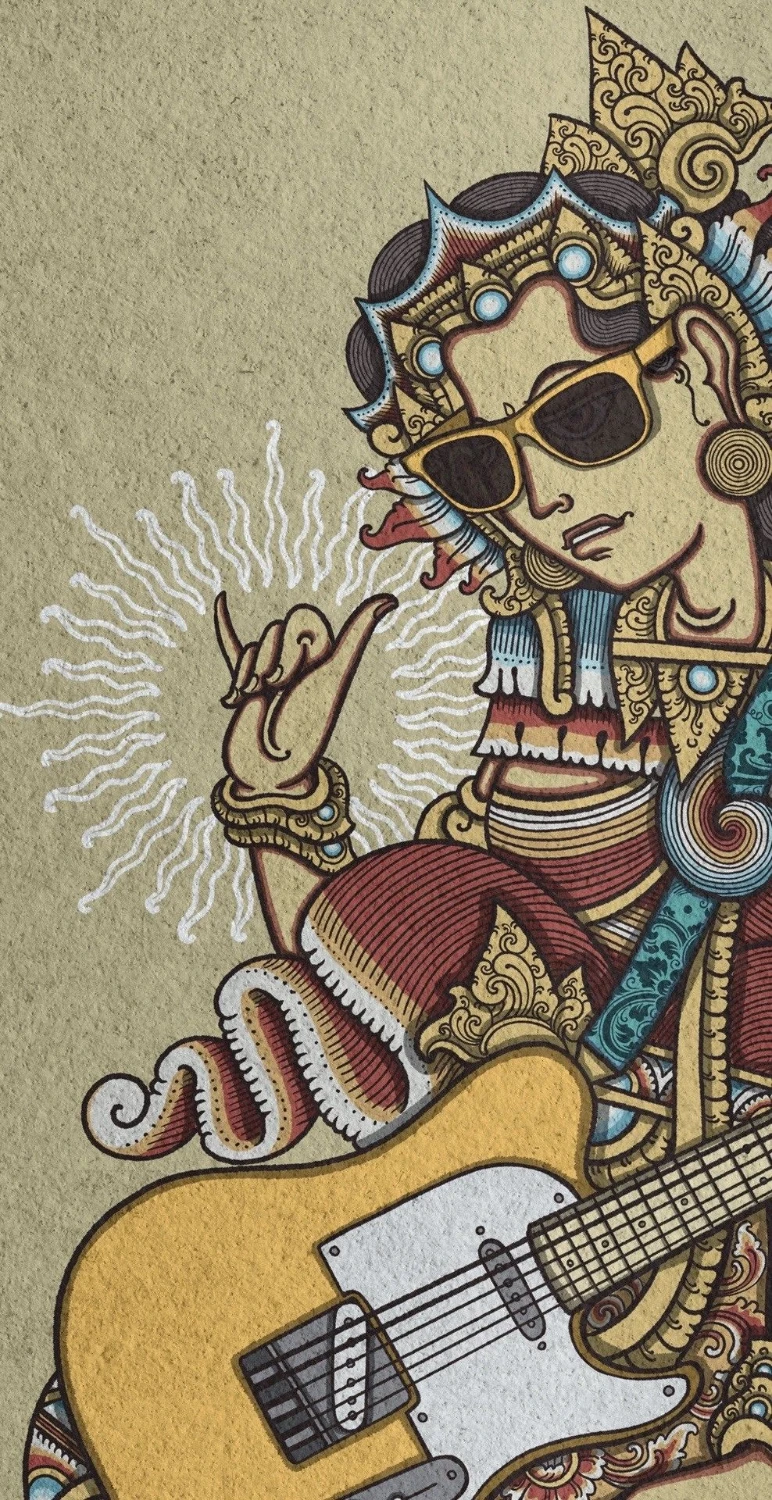
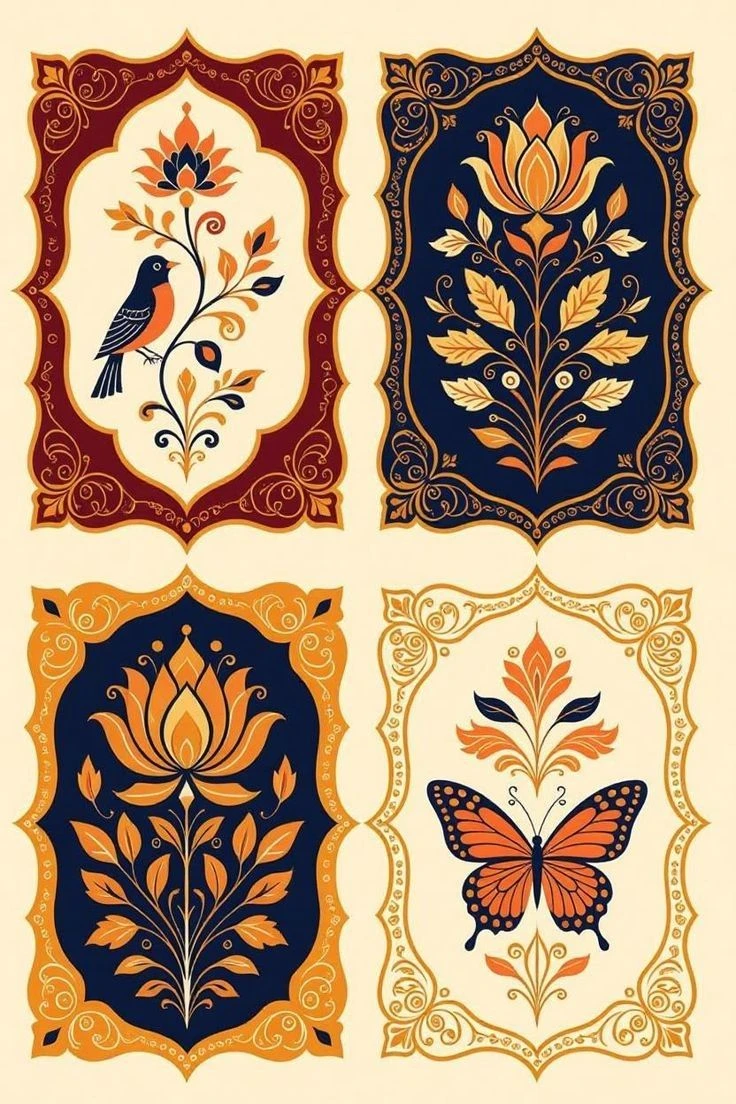
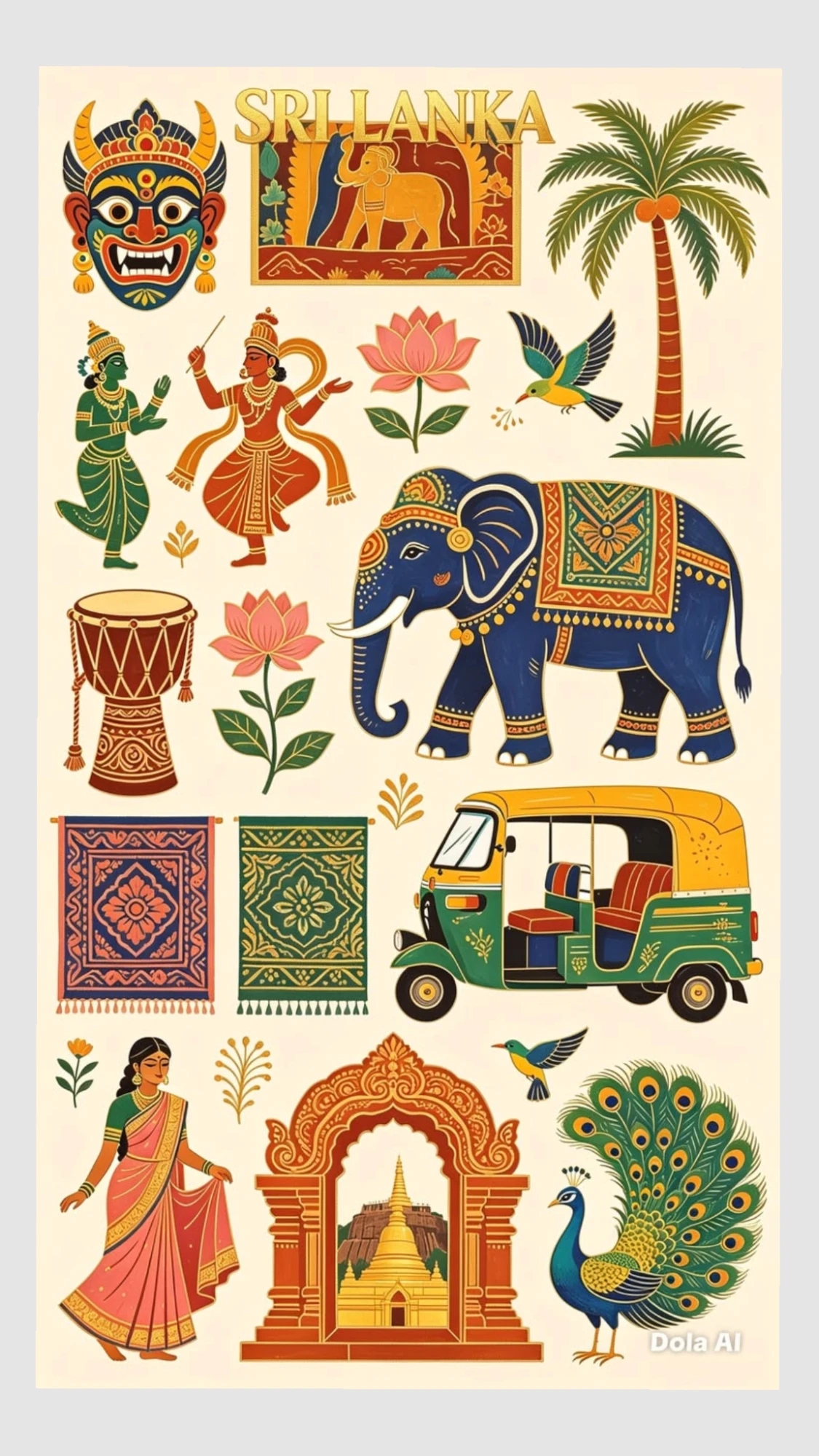
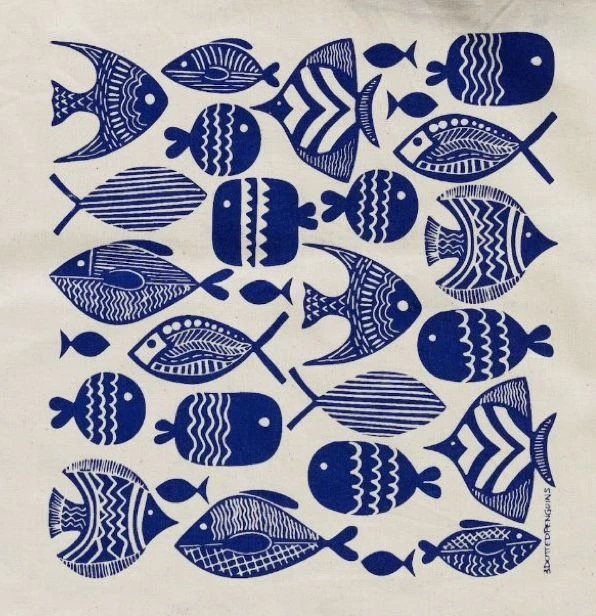
The visual references
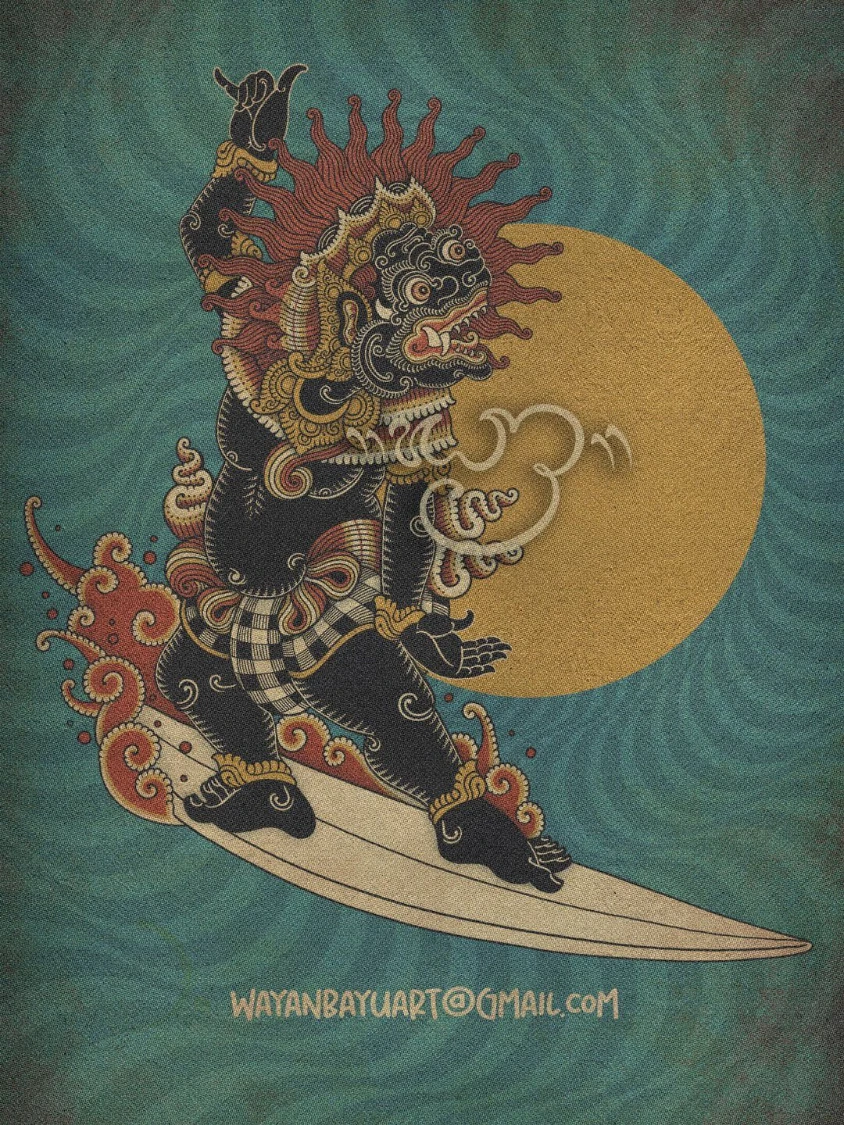
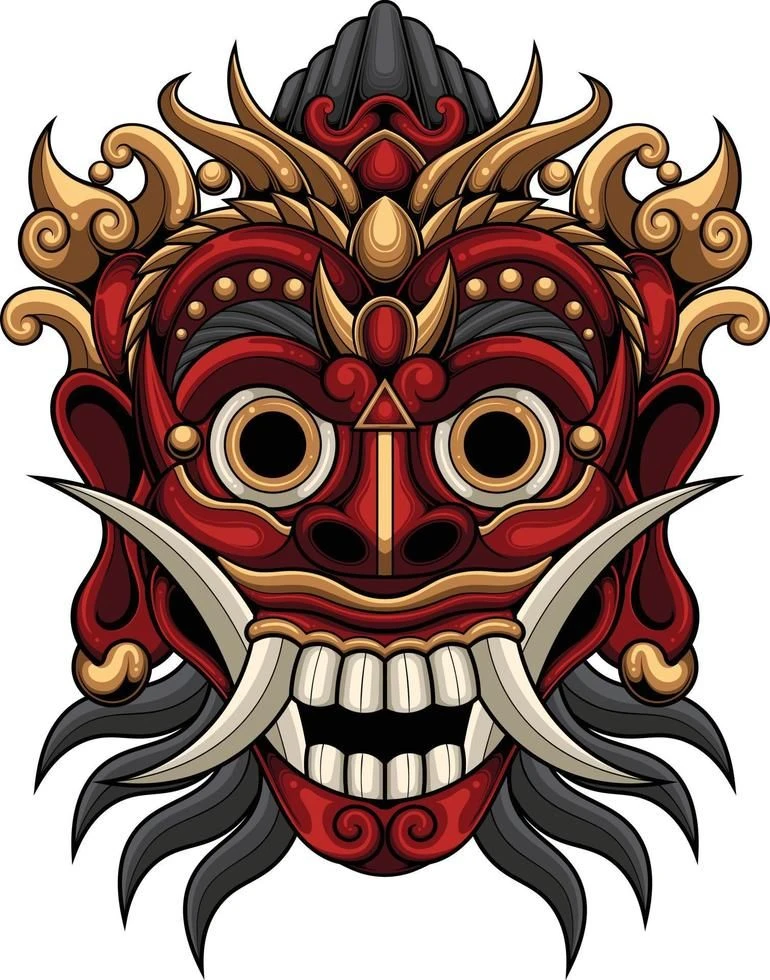
The images that shaped this site's palette — maroon, indigo, saffron, teal and cream — and its folk-illustration style. Click to enlarge.
Indo-Asian motif vocabularyJavanese court dance attireBalinese topengTree-of-life panelsPeresean, LombokIndigo block-print fishWayang goes surfingRock & roll wayang
The Wastra Flipbook
Turn the pages
The whole atlas, bound as a book. Click a page edge, use the arrows or swipe. Then add your own pages — notes, sketches, photos, or the batik you drew in the Studio — and print it as a PDF.
Make your page
Your pages are saved in this browser and appear before the back cover.